
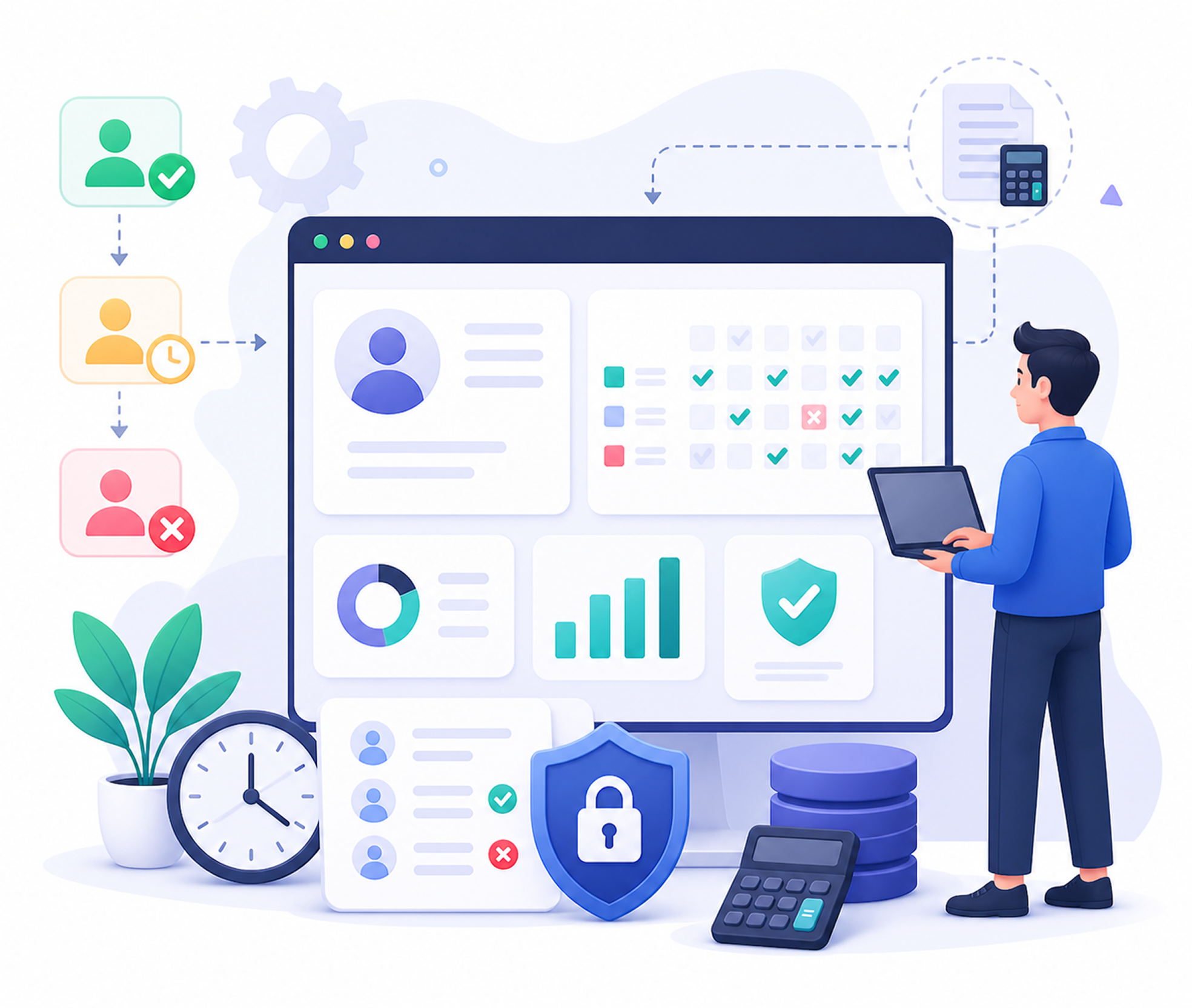
For many HR teams, payroll errors often begin with frequent attendance regularization requests submitted after attendance processing is completed. Employees may request corrections for missed punches, late arrivals, or incorrect attendance markings even after the attendance cycle is finalized. While these requests may seem minor, they can significantly affect payroll calculations.
When attendance data keeps changing after the payroll inputs are prepared, HR teams are forced to reopen attendance records, rerun calculations, and validate salary data again. Restricting attendance regularization after the attendance consolidation process helps organizations maintain payroll accuracy, protect finalized data, and avoid last-minute payroll disruptions.
Attendance regularization is a process where employees request corrections
to their recorded attendance. This may include fixing missed punches, correcting late
coming entries, or converting an absence into a valid working day due to business
travel, field work, or system issues.
While regularization is necessary to ensure fair and accurate attendance records, it
must follow a defined timeline. If corrections are allowed indefinitely within the
attendance software, the attendance data used for payroll may keep changing, leading to
inconsistencies in salary calculations.
One of the most common payroll challenges occurs when employees submit
attendance corrections after the attendance processing cycle is completed. When this
happens, HR teams must reopen the attendance period and rerun the time consolidation
process. Even a single attendance change can impact several payroll parameters such as
payable days, overtime eligibility, late coming deductions, or leave balances.
By restricting attendance regularization after consolidation, organizations ensure that
payroll inputs remain stable. Once attendance is finalized, the data used for salary
calculations remains unchanged, preventing unexpected salary revisions and ensuring
smoother payroll closure.
Another important benefit is improved data reliability. Payroll systems rely heavily on
finalized attendance records to determine employee earnings. Allowing continuous
modifications increases the chances of discrepancies in salary slips, statutory
calculations, and payroll reports. Restricting changes after consolidation ensures that
payroll calculations are based on verified and approved attendance data.
This approach also reduces operational pressure on HR teams. Payroll periods are
typically time-sensitive, and repeated attendance corrections can delay salary
processing. When a restriction is in place, employees are encouraged to submit
regularization requests within the defined timeline, which helps HR teams close
attendance and payroll cycles more efficiently.
Also Read: How to Choose the Right Attendance Management System?
Modern HR systems such as Pocket HRMS allow organizations to configure restrictions on
attendance regularization once the Time Consolidation process is completed.
When this control is enabled, the system automatically checks whether the attendance
period has already been processed. If consolidation has been completed, the system
prevents employees from submitting new regularization requests for that period and
informs them that the attendance cycle is closed.
This automation ensures that attendance data remains locked once it is finalized, eliminating the need for HR teams to manually monitor or reject late correction requests.
Payroll accuracy depends heavily on the stability of attendance data. If attendance keeps changing after payroll preparation begins, even small modifications can create salary discrepancies and delay payroll processing.
Restricting attendance regularization after consolidation ensures that attendance records remain consistent, payroll calculations stay accurate, and HR teams can complete payroll processing without last-minute disruptions. By implementing such system-driven controls through platforms like Pocket HRMS, organizations can strengthen payroll governance and create a more disciplined attendance management process


-in-india-complete-guide-2026.png)