
Employee payroll processing has evolved from manual ledgers to spreadsheets and payroll management systems that automate the entire operation. However, despite this transformation, it still requires human intervention at different stages, such as clicking through menus, uploading required files, verifying reports, etc.
Nowadays, with the advent of Artificial Intelligence (AI) and other modern technologies, there has been a new development in payroll processing: Voice-Activated Payroll Management Software. As AI and Natural Language Processing (NLP) advance further, payroll teams can easily process their employees’ payroll with the help of intuitive voice commands.
So, let us wrap our heads around the idea of voice-activated payroll systems and why you should opt for it, while also considering the risks and challenges.
Voice-activated systems are no longer confined to smartphones or smart voice assistants. It has entered the modern workplace, providing HR teams with an intuitive option to interact with their HRMS and payroll systems. Several factors are driving this shift towards a more natural way of interaction:
1. Easier Self-service
Employees want instant answers to their queries, such as ‘where is my salary?’ or ‘what
is my leave balance?’. Having voice-based assistance helps them get instant answers to
such questions, making the experience intuitive for them, while relieving the HR teams
from answering repetitive queries.
2. Increased AI Interactions
AI has already proved to be a game-changer in improving different aspects of HR
management like payroll, leave, attendance, insights, etc. By extending the use of AI
into payroll, HRs can intuitively interact with the system, making it easier to process
payroll and gather insights.
3. Reduced Administrative Overhead
Since payroll teams handle repetitive tasks, having voice commands provides them with
easier options to undertake payroll processing or fetch budget reports. Using such
systems, HR can focus on strategy instead of inner workings.
4. Enhanced Accessibility
For employees on the move, having voice-activated systems improves their productivity,
as they can simply talk with their systems for undertaking tasks. It is easier to
accomplish their tasks using voice commands, rather than navigating complex menus and
dashboards, when they are working remotely.
A voice-activated payroll system integrates voice recognition features and
AI with payroll software, which makes the process of payroll management even more
intuitive. With voice-enabled commands, payroll tasks like processing, report
generation, budget tracking, etc., become simplified, enabling easier payroll
operations.
Voice-enabled payroll systems combine different advanced technologies to help simplify
employee payroll, such as:
Voice-activated payroll systems also help the employees, who can use them to download payslips, check their last salary, update leave details, etc. On the other hand, HR and administrators can process payroll, generate custom reports, as well as get updates related to compliance via simple conversations. Having such an intuitive experience makes the process more humane and natural, making HR technologies more accessible.
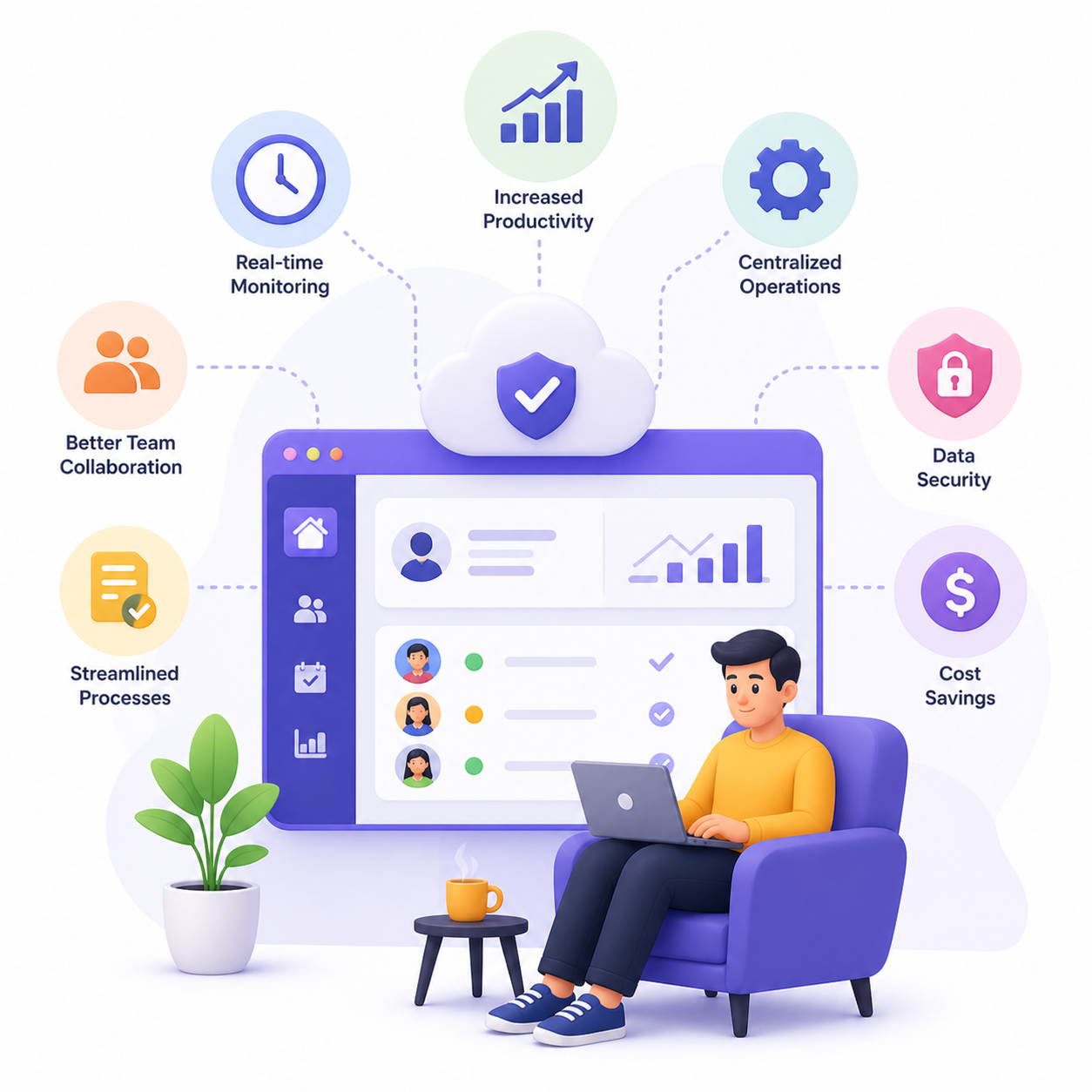
Voice-enabled systems provide better efficiency and improved experience, making them excellent for payroll systems. Some of the major benefits include:
➔ Improved Efficiency
Whether you are processing payroll or gathering employee details, using voice commands
and navigation reduces the time required. Instead of having to jump through multiple
menus, HRs can simply enquire using voice, making the process feel intuitive and
natural. It reduces manual effort and minimizes errors, resulting in improved
efficiency.
➔ Enhanced Employee Experience
Since accessing employee information feels more intuitive using voice, they can easily
navigate their self-service portal using voice commands. It is especially useful for
deskless workers such as those working in manufacturing, logistics, etc., as it
simplifies information access, improving employee satisfaction and engagement.
➔ Better Accuracy
Voice-enabled systems can gather the required data and share it with the employee, using
accurate information within the database. It also helps avoid complex menu paths,
resulting in easier access to the data.
➔ Enhanced Accessibility
A voice-based payroll system also makes it easier for employees with visual or mobility
impairments to access their data easily. Similarly, it also makes it easier for
employees working in the field, enabling seamless updates.
➔ Strategic Benefits
By automating payroll through voice-based commands, HR teams can shift their focus
towards other strategic initiatives. It enables them to stay productive even when
undertaking payroll processing, as the system can work in the background, while they
take care of creative tasks such as analysis, developing employee engagement strategies,
and more.
While it may seem like a surefire solution for improved payroll efficiency, deploying a voice-based payroll solution comes with its own challenges. Some of the common ones are:
1. Data Security
Since payroll data is confidential within organizations, voice systems should have
Multi-Factor Authentication (MFA), which includes technologies like voice-based
biometrics, PIN and OTP verification, etc.
2. Integration Issues
Voice assistance requires seamless data transfer between different systems for smooth
functioning. However, to integrate with legacy systems, voice-based payroll software may
require custom APIs to ensure accurate data retrieval.
3. Compliance
Since voice is considered as a Personally Identifiable Information (PII), companies must
ensure that they comply with the local, national, and global laws and regulations
regarding its storage and handling.
4. Language Barriers
Voice-based systems should be able to understand different accents and dialects, as well
as various languages, to ensure their easier adoption. However, it is possible only via
targeted AI training, which incurs additional costs.
5. Adoption Issues
While voice-based systems can seem like the future, HRs and employees are often not
tech-savvy, and hence, might delay their adoption. Hence, companies that wish to deploy
the system should provide adequate training and communicate with their HR teams for
building confidence and ensuring smoother adoption.
Now that we have a robust idea of the benefits and challenges of deploying a voice-activated payroll system, let us understand the process of implementing it, with the help of the following steps:
We are already witnessing the beginning of conversational and intelligent AI in payroll systems. As the technology behind voice recognition and AI improves further, voice-activated payroll solutions will be able to predict our queries and suggest actions. For example:
Such predictive queries will enable better analytics, allowing the payroll teams to manage payroll errors, forecast budgets, and ensure compliance with the statutory regulations. Similarly, multi-lingual support will ensure the adoption of these systems, building digital literacy gaps.
Voice-enabled payroll solutions are the next evolution in the digital
transformation of Human Resources, and HR personnel are adopting this tech to bridge the
gap between people and technology.
These systems are a practical step towards an efficient future for HR, where accuracy
works in tandem with accessibility. As for the employees, it represents empowerment, as
they can get instant answers to their payroll-related queries.
Hence, the real question is no longer ‘if’ HR teams will adopt it, it is ‘when’! To stay
ahead of the curve, you should deploy it at the earliest in your organization, as we are
already witnessing the rise of AI-based payroll systems for HR teams.